
In an era where education is increasingly influenced by data, institutions are seeking professionals who can make sense of that information both qualitatively and quantitatively. The new Master of Science in Data Science for Learning Applications (DSLA), developed jointly by the USC Rossier School of Education and the USC Viterbi School of Engineering, was born from that vision: to cultivate leaders who can connect the technical power of data science with a deep understanding of how people learn. Applications for the inaugural cohort are due December 1, with application fee waivers and scholarships available.
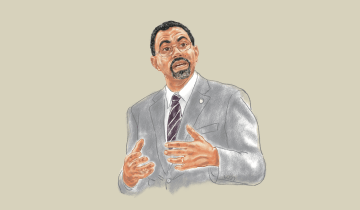
Stephen Aguilar, associate professor of education at USC Rossier and one of the program leads, shared that students coming into the program who want to do applied work, DSLA becomes this “perfect nexus of learning from the best” in education and computer science. “[Students are] learning from the best on the technical side, and you’re learning how to apply that to educational contexts,” Aguilar added. “We’re going to need more of that, especially as AI use in education becomes more prevalent.”
The idea for DSLA emerged from a shared belief among faculty at USC Rossier and USC Viterbi. Emilio Ferrara, professor of computer science and fellow program lead, explained, “We conceived DSLA out of a conviction that as learning ecosystems become increasingly data-rich—from higher education to corporate training and online platforms—leaders must bridge quantitative fluency with a deep understanding of how people learn.”
That conviction led to an innovative collaboration: USC Rossier contributes decades of expertise in learning theory, motivation and human development, while USC Viterbi brings world-class strengths in computation, analytics and engineering. Together, the two schools created the joint master’s degree designed to train professionals who can design, measure and refine learning systems that are both data-driven and learner-centered.
Who is this program for?
When asked who would make an ideal fit for this program, Ferrara said, “Someone curious about how humans learn! Especially where technical and social dimensions intersect. You should be willing to dig into code and statistics, but also to ask questions about fairness, design and context. If you enjoy translating data into human-centered improvements in learning systems, this program is made for you.”
Helena Seli, professor of clinical education at USC Rossier and co-lead for the program, emphasizes how central data has become to understanding and improving learning. “There’s a direct and relevant intersection between data science and learning and performance,” she said. “We need data to understand who our learners are before they engage with us, while they’re engaging and afterward to see whether and how those experiences advance the outcomes we designed to be met.”
Seli noted that the collaboration with USC Viterbi provides new ways to harness data through advanced technology. “Working with the USC Viterbi avails us a whole new opportunity to look at data through the lens of technology—harnessing computational tools to gather and interpret data in far more sophisticated ways,” she added.
Traditionally, the USC Rossier School of Education has emphasized gathering data about learning and motivation through established social science methods such as surveys, interviews and observations. DSLA now allows students to go further. “We can teach students to bake data-gathering methods directly into learning experiences themselves,” Seli explained. “That includes capturing digital data—the actual traces of learner behavior—while they engage with simulations, games or adaptive learning systems.”
What will students learn?
DSLA balances technical data science training with human-centered approaches to learning. Every analytical method is contextualized through the lens of cognition, motivation and human behavior.
“What makes the program unique,” said Seli, “is that students experience both engaging with research on how individuals learn and what motivates them, and taking classes in engineering that emphasize human-centered design and the promise of AI.” The curriculum ensures analytics never become an end in themselves. Instead, students are taught to use data as a lever for improving learning experiences.
Students gain fluency across a suite of tools and methods: programming in Python, data visualization, machine learning, predictive modeling and analytics for learner engagement and performance. They also study A/B testing, causal inference and evaluation design, learning not just how to use AI and data science methods, but when and why to use particular methods in educational contexts.
“[Students are] getting a special blend,” says Aguilar. “The collaboration between USC Rossier and USC Viterbi means students develop deep technical expertise while also learning to critique and interrogate what those tools mean in practice…we need people who understand what happens when that code is out in the world, especially within educational institutions.”
Application is embedded throughout the DSLA program. Coursework is project-based and grounded in real datasets from educational or workplace settings. Students may analyze learner engagement in online courses, evaluate corporate training effectiveness or model student success factors in higher education.
Implicit in a lot of what’s happening now around AI is a kind of behaviorism, where if an individual produces the right inputs, they will get the right outputs according to Aguilar. “But that overlooks what’s going on inside someone’s head, how they think, what motivates them, their experiences and histories,” he said. “USC Rossier’s strength is in seeing learners as full people, and DSLA trains students to attend to that humanity while leveraging the most advanced tools of data and technology.”
For more information
Prospective students are invited to register for the Curriculum Exploration Webinar on November 13 at 5:00 p.m. PT to learn more about the program, meet faculty and explore how DSLA bridges data science and learning design. Prospective students can also schedule one-on-one consultations with an admissions professional to discuss goals, requirements and fit.
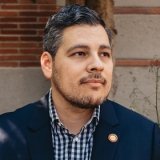
Stephen J. Aguilar
- Associate Professor of Education
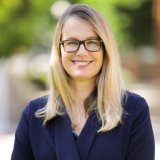
Helena Seli
- Professor of Clinical Education, Assistant Dean of Academic Program Development