

Dear Friends,
As we approach the end of the year, I find myself reflecting on the moment we are living through and what it means for education. Schools, colleges and universities have become the site of deep political, cultural and social divisions. We have witnessed debates over curricula, equity, admissions and identity play out in classrooms, on school boards and across campuses nationwide.
Learning losses and divisions stemming from the COVID-19 pandemic, increased acts of violence on campuses and skepticism that the cost of a college degree is actually worth it have shaken the public’s confidence in education. At the same time, persistent inequities pertaining to affordability and access remind us that we are still far from ensuring every child has access to the quality learning they deserve.
A recent Walton Family Foundation–Gallup poll showed that just 35% of the American public is satisfied with the state of K–12 education in the United States, and another recent Gallup poll shows that the percentage of Americans who think attending college is “very important” has dropped to 35%. The result is clear: Public trust in education has eroded. Where confidence in our institutions was once taken for granted, today it must be earned again. This loss of trust threatens not only our educational systems but also our democracy, which relies on an informed and engaged citizenry.
At USC Rossier School of Education, we have never shied away from hard questions. In recent years, we have asked whether schools of education remain relevant and have examined the essential link between education and democracy. In this issue, we turn our attention to an urgent challenge: How do we rebuild the public’s trust in education?
Rebuilding trust requires honesty about the past, creativity in the present and courage for the future. You will see all three reflected in the pages ahead.
Our faculty, students and alumni are leading in this work, not only in Los Angeles but also across the nation. In these pages, you will learn about the incredible leadership of Superintendent Elizabeth Blanco during the horrific L.A. fires. Her team successfully reopened Pasadena Unified schools a day before the Eaton Fire was finally put out. You’ll also be introduced to one of our esteemed doctoral students, Zuriel Oduwole, who was nominated for this year’s Nobel Peace Prize.
Creative and research-backed solutions to improve our schools are also being developed and put into practice by our faculty. Dean’s Professor of Leadership Adrianna Kezar’s Shared Equity Leadership model is providing a new path for colleges and universities to approach equity, and Fahmy and Donna Attallah Chair in Humanistic Psychology Mary Helen Immordino-Yang’s innovative research on neuroscience and education is being brought to life in the classroom through a new USC CANDLE Innovation Lab initiative. The USC Rossier community is demonstrating that trust can be rebuilt when educators act with integrity, transparency and a commitment to the public good.
My hope is that this issue challenges you to think about your own role in this effort. Trust is not restored overnight, and it cannot be delegated to others. It can be rebuilt by demonstrating how our work in the field of education benefits all of society and not just a select few. It is something we create together, day by day, through our actions, our words and our willingness to listen. Thank you for being part of that ongoing work.
Fight On!
Pedro A. Noguera, PhD
Distinguished Professor of Education
Emery Stoops and Joyce King Stoops Dean, USC Rossier
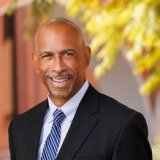
Pedro Noguera
- Distinguished Professor of Education
- Emery Stoops and Joyce King Stoops Dean

Adrianna Kezar
- Dean's Professor of Leadership and Co-director of the Pullias Center
- Wilbur-Kieffer Professor of Higher Education
- Director Pullias Center for Higher Education
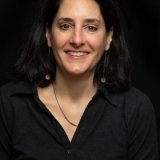
Mary Helen Immordino-Yang
- Fahmy and Donna Attallah Chair in Humanistic Psychology
- Director, USC Center for Affective Neuroscience, Development, Learning and Education (candle.usc.edu)
- Professor of Education, Psychology & Neuroscience
- Brain & Creativity Institute; Rossier School of Education University of Southern California Member, U.S. National Academy of Education