


For decades, colleges and universities have responded to achievement gaps through a variety of efforts, including diversity, equity and inclusion (DEI) initiatives—only to see marginalized students continue to struggle on campuses. One major reason? DEI efforts have traditionally been relegated to the periphery of the university experience, limiting their reach and effectiveness.
Enter Shared Equity Leadership (SEL), a framework that makes equity a focus campuswide instead of siloing it in DEI offices. Research indicates that historically underrepresented students experience meaningful outcomes through this model, developed by Adrianna Kezar, Dean’s Professor of Leadership and co-director of the Pullias Center for Higher Education. Through a multiyear study, funded by the Sloan Foundation, the Arthur Vining Davis Foundations and the ECMC Foundation, Kezar began her research on SEL in 2019 in partnership with the American Council on Education.
Since then, dozens of institutions across the country have used the research to launch the SEL model on their campuses.
As DEI is subjected to legislative bans and federal scrutiny, the Shared Equity Leadership framework is thriving at the colleges and universities that rely on it by weaving equity into all aspects of how they function. With the SEL approach, lawmakers can’t simply shutter a DEI office and remove its staff or budget to stymie equity efforts.
“One of the benefits is that it’s actually resistant to the restrictive political environment that exists today,” Kezar says.
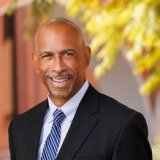
Pedro Noguera, the Emery Stoops and Joyce King Stoops Dean of the USC Rossier School of Education, praises the SEL model for making equity an institutional mission rather than “a tangential program.”
When this is achieved, Noguera says, equity “is taken much more seriously.”
The Problem: Why DEI Has Struggled
Although DEI programs at higher education institutions date back over 50 years, national data reveal that marginalized students of color, such as Black, Latino and Southeast Asian undergraduates, still have lower graduation rates than the general student population. The same goes for their economically disadvantaged and first-generation college student peers.
When the American Council on Education asked Kezar to examine why DEI initiatives weren’t effecting change, she suspected it was because these efforts weren’t braided into the fabric of campus life.
“For a long time, campuses have implemented DEI programs and services, but the mainline faculty and staff aren’t doing their work differently,” Kezar said. “The students’ day-to-day experience isn’t changing much. Students may find a cultural center that provides them some sense of belonging, but their general experience, whether in their classes or when they go visit services like financial aid, isn’t positive.”
DEI efforts and programs, Kezar says, are marginalized on campuses and have been tacked onto the periphery. So, what do we need instead? Kezar’s research shows that “transforming campus to create cultures—the overall environment—that support students,” Kezar says.
Royel Johnson, an associate professor at USC Rossier and director of the National Assessment of Collegiate Campus Climates in the USC Race and Equity Center, says that concentrating an institution’s equity efforts into a single DEI office has drawbacks for multiple reasons.
“Typically, there’s an isolated budget for that, a set of staff who are working on that, and, oftentimes, what we know from research is that these folks aren’t positioned with any authority to hold people accountable for the work of DEI,” he says. “They’re often underfunded and working with limited resources.”
In Kezar’s research, the colleges and universities that shifted outcomes for underrepresented students didn’t do it only with a DEI office. Instead, they shared responsibility and leadership widely among a critical mass of educators and changed the culture. To pinpoint how they successfully intervened, she decided to study these institutions.

The Research: What Worked
The initial SEL study examined eight diverse institutions that were already narrowing equity gaps in retention, graduation and achievement. Despite differences in size, location and type, all the institutions shared a common strategy: broad-based ownership and leadership of equity work matched with accountability for outcomes.
“People at all levels of the institution—the senior administration, faculty leaders, staff leaders, different community groups, sometimes student leaders—were all taking responsibility for changing the environment so that students from all backgrounds could be successful,” Kezar says.
Faculty redesigned curricula and teaching methods, using data in collaboration with one another to help them better understand student experiences. Reviewing campus climate data helped campus leaders recognize the alienation of some students and develop techniques to support them.
With equity in mind, one institution removed its in-person registration requirement for an academic program because it posed challenges for part-time and online-only students. A different institution scrapped a financial aid policy that saw students’ schedules deleted if they did not pay tuition by a firm deadline. A university official explained to colleagues how the policy lowered student retention rates and wasn’t equitable.
As Kezar and her research team began to think about naming the types of successful practices that were creating positive campus environments and closing achievement gaps, they came up with the term “Shared Equity Leadership.” The institutions weighed in and agreed that SEL was the best label for their efforts.
The foundation of implementing SEL requires both personal and organizational transformation, according to Elizabeth Holcombe, senior research associate in the Pullias Center.
“A lot of the research that had been done in this space focused either on individual change, like doing some training for people and getting them to change their beliefs, or organizational change—changing these policies at the whole university level,” Holcombe says. “And what we found is that both of those things were actually important to really make the type of change feel transformative.”
In addition to combining individual and organizational transformation, SEL uses key practices and values that alter the campus culture, Kezar explains. The practices involve decision-making, policymaking and data use through an equity lens. “Yet at the same time, culture change involves relationships, trust and a shared vision,” Kezar says. “SEL involves a new approach to leadership undergirded by very different values that develop trust and positive relationships on campus.”
At its core, Kezar says, SEL engages values like “love and care” that leaders extend to students to support their success. School officials using the approach also commit to improving relational, communication and decision-making practices with one another.
“The model is very much about personal transformation and the different ways of showing up as a leader,” Kezar says.
The current phase of research tracks six institutions in the Southeast, West, Midwest and Northeast that are adopting the SEL framework from scratch. Kezar and Holcombe are interested in investigating how institutions that want to support diverse groups of students undergo the cultural change necessary from the outset.
“We’re working day to day with campuses that want to transition their work into a Shared Equity Leadership approach, so that we can see what are the first decisions and first steps they need to make to get there,” Kezar says.
“Culture change involves relationships, trust and a shared vision. SEL involves a new approach to leadership undergirded by very different values that develop trust and positive relationships on campus.” —Adrianna Kezar, Co-director, Pullias Center
The Road Ahead
The political climate has changed drastically since the SEL research project began ahead of the nation’s racial reckoning after the police murder of George Floyd in 2020. During that summer, colleges were much more explicit about the racial equity work their campuses needed, Holcombe recalls.
“Some, not all, took advantage of that opportunity to make some real changes,” she says. “Unfortunately, it just wasn’t very long before the backlash started.”
By September 2020, President Donald Trump had issued an executive order to combat “race and sex stereotyping,” which laid the groundwork for some state legislators to introduce policies to restrict DEI.
A number of institutions, Holcombe adds, not only retreated from racial equity commitments but also scrubbed their websites of any work they did achieve on that front. Since 2023, at least 20 states have passed anti-DEI laws, and when Trump returned to the White House in January 2025, he fired off a series of executive orders intended to excise DEI from public life.
“Can we think about 2020, where it felt like an unprecedented momentum to do the work of equity?” Johnson says. “We were more precise and bold in naming oppressive phenomena, to now, just five years later, taking regressive steps.”
Noguera notes that, first, the federal government has yet to explain why DEI is illegal, which makes the White House’s efforts to ban it an overreach.
“Second of all, this country is diverse,” he says. “Like it or not, that’s the nature of our society in every way. Third, equity is about a commitment to ensuring that we’re meeting the needs of all students, and I think all institutions are required to do that. And fourth, we know that when there’s a commitment and an effort made to ensure that students feel included, they perform better. No one performs well when they feel marginalized.” These are not radical ideas, Noguera stresses, but very much mainstream ones.
No matter the political environment, the SEL model can lead to change, Holcombe contends.
“Some of the campuses that we studied did have DEI offices or DEI infrastructure, but some of them didn’t,” she says. “So, we saw that there are multiple ways that the work could get done.”
“We know that when there’s a commitment and an effort made to ensure that students feel included, they perform better. No one performs well when they feel marginalized.” —Pedro Noguera, Dean, USC Rossier
The Bottom Line
Pressing forward, Pullias Center researchers, with funding from the ECMC Foundation and the Sloan Foundation, have organized professional development workshops, coaching sessions and communities of practice for the six institutions implementing SEL. Holcombe says she’s cautiously optimistic that these strategies have been helpful, noting that some institutions that wanted to take part in the project ended their involvement due to DEI restrictions in their states.
“But we have other ones that are staying the course and that really find this framework to be helpful for them during this time,” Holcombe says. Those institutions have asked: “What is our mission as a campus, what are our values as a campus, and which parts of the goals that we’ve been pursuing around equity are really core to who we are as an institution?”
Noguera’s advice is not to let a term like DEI interfere with doing the work.
“If you have to change the words to avoid getting your funding cut off, then do that,” he says. “But focus on making sure that all people feel welcome, feel supported. Focus on supporting students who may come to us with greater needs so they can graduate and go on to make contributions to society.”

Adrianna Kezar
- Dean's Professor of Leadership and Co-director of the Pullias Center
- Wilbur-Kieffer Professor of Higher Education
- Director Pullias Center for Higher Education

Royel M. Johnson, PhD
- Associate Professor & Director
Pedro Noguera
- Distinguished Professor of Education
- Emery Stoops and Joyce King Stoops Dean