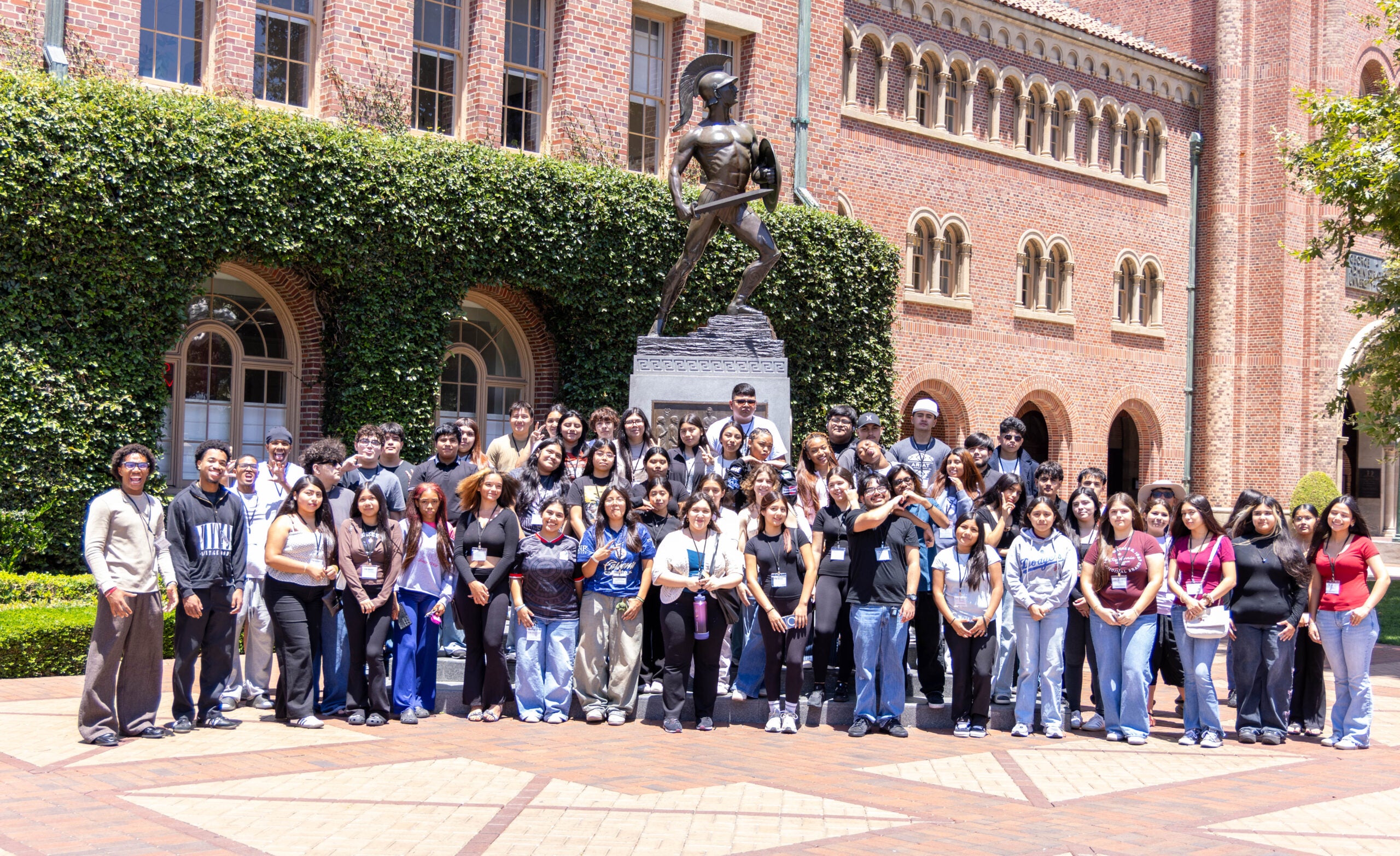
For one week in June and another in July, 124 high school students from Riverside and Los Angeles counties traded their summer plans for USC dorms, roommates and a full schedule of leadership and problem solving training on campus. By the end of the program, the week had more than filled a summer resume, it had reshaped how some participants saw their academic futures.

The Third Space Youth Institute, a workforce readiness program for high school students, moved to USC Rossier after six years at USC Annenberg. Students, 14- to 18-year-olds, participated through partnerships with the Riverside County Office of Education, Los Angeles County Office of Education, and City of Los Angeles schools for an on-campus residential program built around essential “power skills” needed for success in college and the workforce.
Leo Medina, a full-time professor at East LA College, serves as an instructor for the program, said the distinction matters. He added that “power skills” equip young adults with the skills necessary to thrive in the workplace. The curriculum is built around five critical attributes: adaptability, cultural competency, empathy, intellectual curiosity and 360-degree thinking or ACE-IT. “A lot of organizations can teach you technical skills,” Medina said. “But regarding power skills, those are things kids really need early exposure to.”
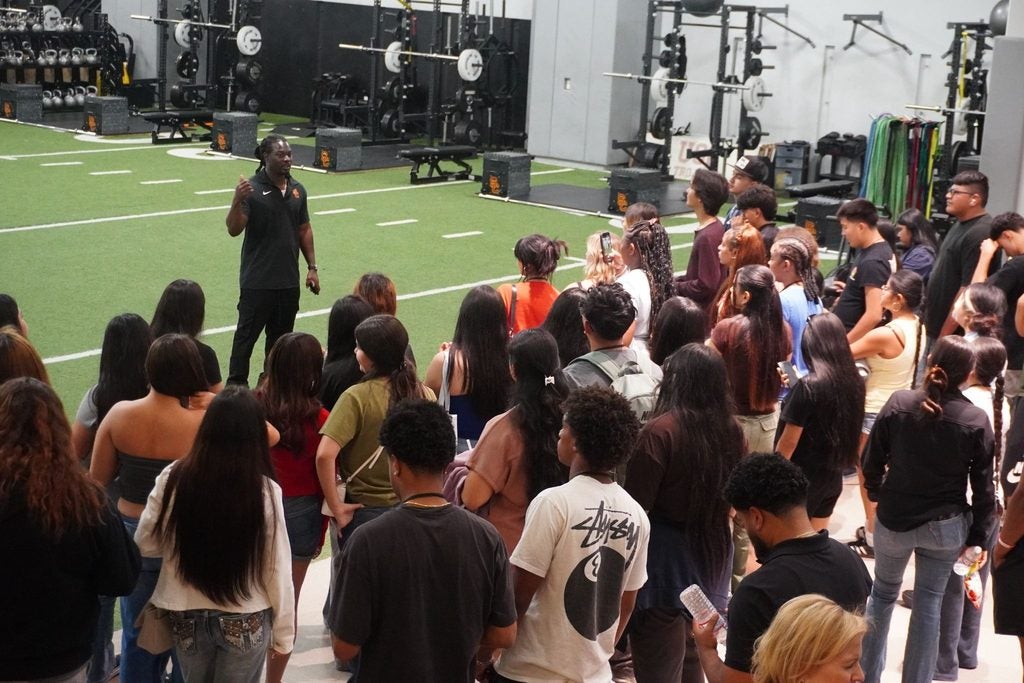
Students rotated through instruction on each attribute, worked in small teams on a final project and met with college advisors throughout the week, combining workforce readiness with college preparation. The weeks culminate in group presentations and a graduation ceremony with their parents to celebrate their accomplishments.
At the parent orientation, Shellee Smith, former executive director of USC Center for Third Space Thinking and current executive consultant for the program, said, “We have [students] for one week, and we will do our very best to give them the skills that they need to succeed whether they go to college or whether they go straight to the workforce.” Smith described the program as a partnership. “We are thrilled that the USC Rossier School of Education is going to be continuing the work that we started at USC Annenberg,” Smith added.
USC Rossier Professor Darnell Cole, co-director of the USC Center of Education Identity and Social Justice, said, “We’re so very thankful to Shellee and the Third Space Center for allowing us to take over that work.”
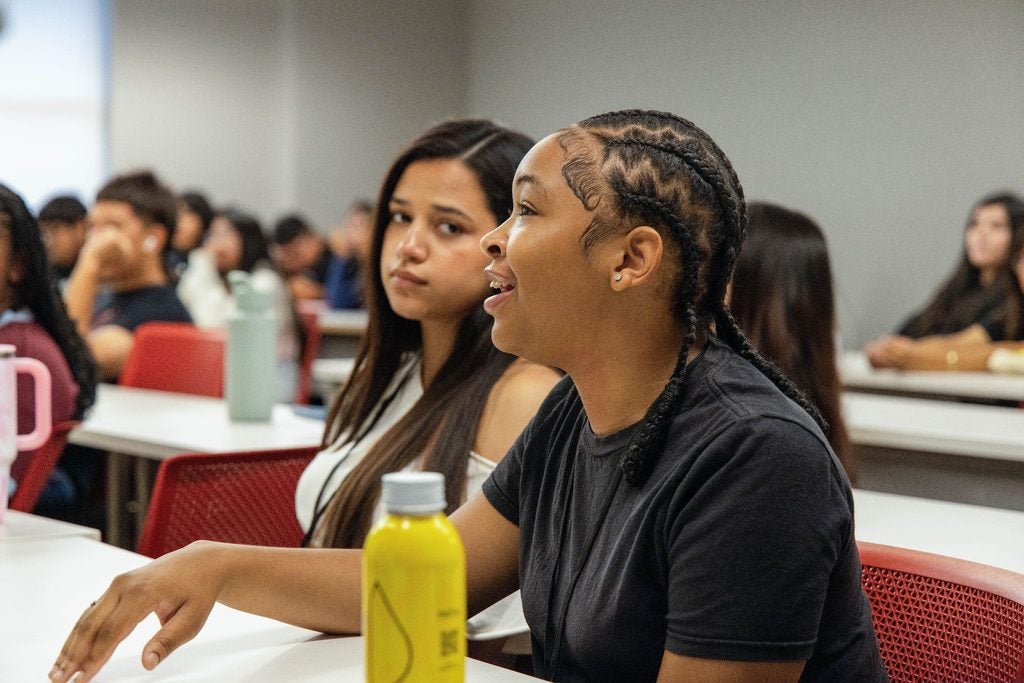
Brea Green, a homeschooled senior from Compton (City of Angels), participated in the Third Space Youth Institute over the summer. On the first day, Green expressed her optimism. “I’m looking forward to learning new things,” Green said. “I wasn’t really sure what exactly I’ll run into, but I know that USC has a lot of good opportunities that I’m very excited to see.”
Her mother, Jamea Hill, discussed how her daughter was initially nervous, but also excited. Hill shared her own summer experience at another university when she was in high school. “I’m not as nervous, because I’m familiar with the setting and I know the growth that it’s gonna give her for her future,” Hill said.
At the end of the week, Green said the most challenging part was adapting to the dorms and having a roommate and added that it was a good social opportunity. Her biggest takeaway was learning “360-degree thinking,” one of Third Space Thinking’s core attributes. “It’s all needed, literally, in life,” she said, “even when I graduate, in college, even as I get older. The week also shaped where she might go to pursue her degree. “USC actually changed my perspective,” Green said. “I want to pursue nursing.”
Because Green was homeschooled, she had autonomy over her schedule. The summer program provided a new structure and way of thinking. “This is an amazing social experiment,” Hill said. As a mother, the biggest takeaway was her daughter connecting with peers. To hear how her daughter was interacting and collaborating with peers on projects, was reassuring. As this was Green’s first time on USC’s campus, being on-site helps to make college seem more of a reality. “For her to branch out and get to know other people with other experiences, it’s a true eye opener, and it’s gonna shape her in the future.”

“I wanted students to know that they have USC faculty and staff in their corner, championing their educational success and enhanced life outcomes,” said Tr’Vel Lyons, USC Rossier research assistant professor, who led the Third Space programs over the summer. “USC should feel like home to them. We pair them with experts not only of the pillars of the ACE-IT framework, but also in personal branding and ethical AI usage. Their voice and their vision for the future matter today and forever. How they decide to tackle problem-solving will literally determine the future we all have.”
Third Space mentor, Angel Becerra, a senior at UCSD studying international business, shared his experience assisting students with their group projects and class lectures as a first-time mentor. Busero attended a similar program when he was in high school and said this is his opportunity to give back. “It’s been fulfilling,” Busero added. “Towards the end, they came all together and I’m proud of them.” His advice to students: “Greatness takes time.”
For their final, similar to a capstone project, students were asked to solve a big societal issue using the ACE-IT framework, then present their solution to a room full of parents and faculty. Issues students presented included climate change and AI data centers, among others.
Following the end-of-week presentations, Professor Cole discussed how students took the criticism well and that that was skill in and of itself. “You did fantastic, and you’re going to keep getting better,” he added. “The most important thing is if you’re able to take this experience back, not only to the communities you reside in, the schools you come from, but integrated into your next step and goals in life.”
USC Rossier Professor Shafiqa Ahmadi, founder and co-director of the USC Center of Education Identity and Social Justice, thanked the mentors, parents and Third Space founders for their partnership. “We’re here as a community,” Ahmadi said to the students. “We have multiple generations here, who care about you and your success.”


